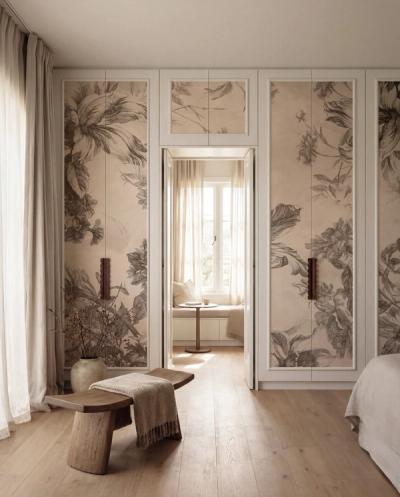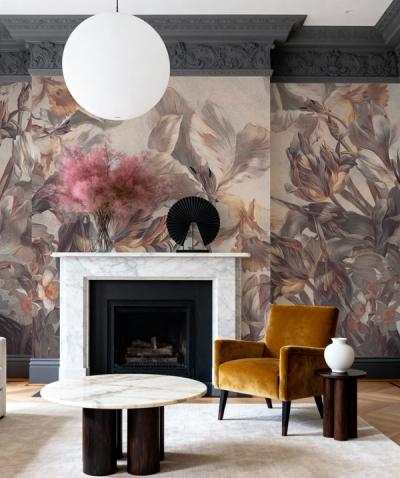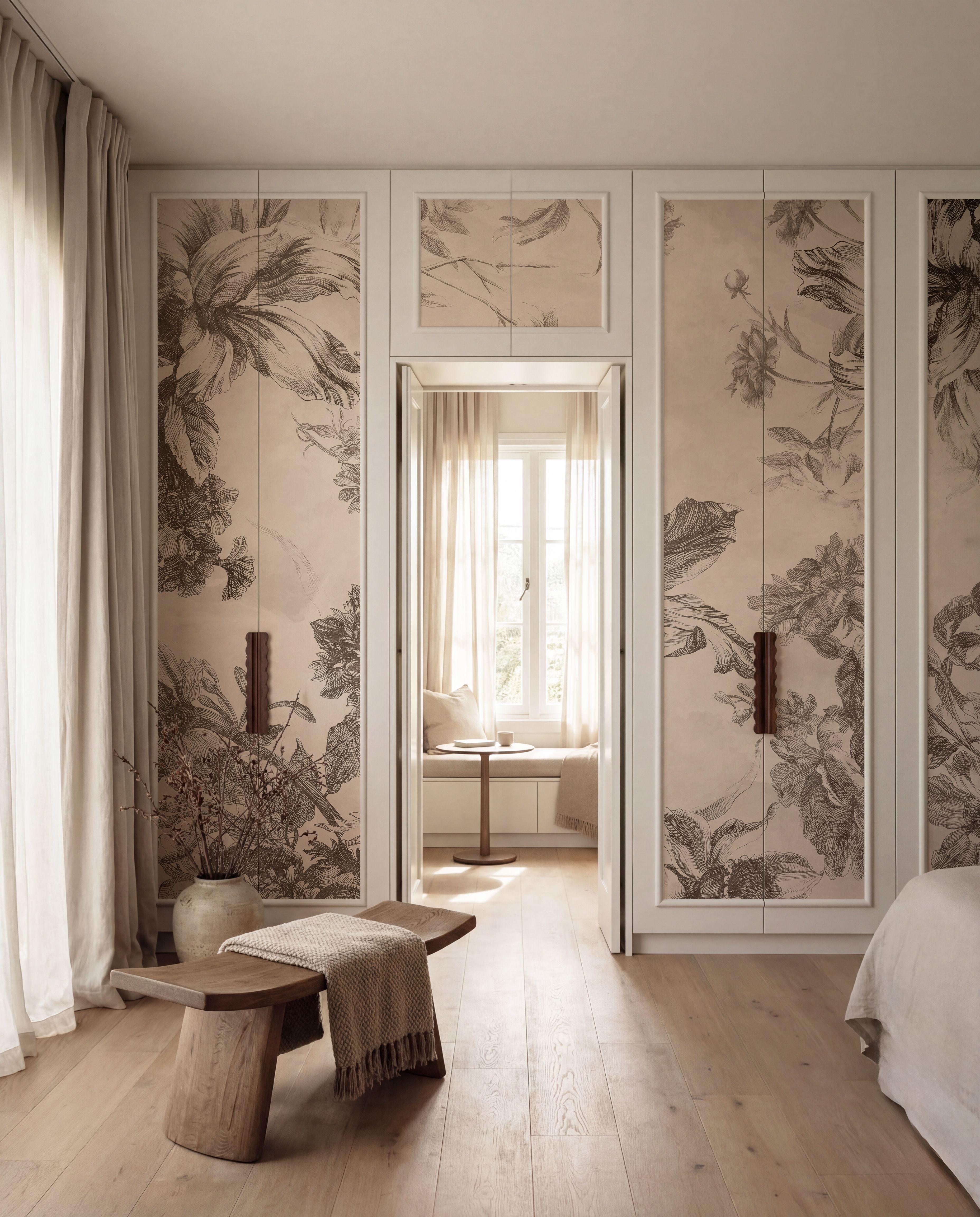
If you like flowers but your room has simple furniture and clean lines, look closely at how the flowers are drawn. Fine outlines, photographs and visible brushstrokes can all give a floral wall a different character. The subject alone will not tell you which design belongs in your room.
Begin with the drawing. It is often what separates a graphic floral from a painted garden, even when both use a similar palette.
A graphic flower starts with its outline
Deco Buds reduces leaves and petal shapes to black lines on ivory. The repeated forms are easy to follow, with background visible between them.
This is a useful direction if what you enjoy about flowers is their shape. You can give the wall a botanical reference while retaining the clear drawing found in other graphic designs.
A curved chair or a simple oval table picks up the rounded forms in the drawing. Since the wallpaper uses a limited palette, a colored piece of furniture does not have to be matched to several flower colors.
Painted flowers bring the artist's marks into the room
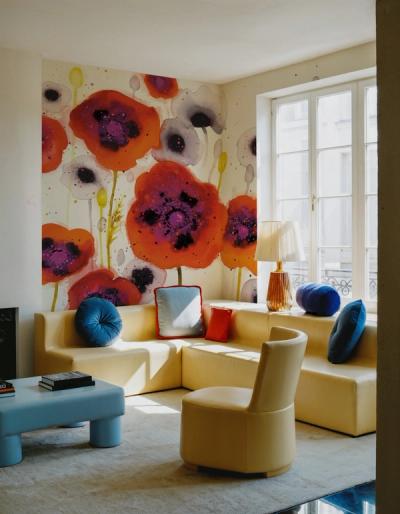
In Pumpkin Poppies I , by Shirley Novak, the flower heads and curving stems remain recognizable, with a painted treatment. The cream behind the orange and yellow blooms keeps the colors separate.
The paint is part of the attraction. If you choose this design, let the room contain a few simpler surfaces where the eye can register the difference. A plain tabletop beside painted flowers can show off the quality of the drawing more clearly than a collection of additional floral accessories.
For a looser composition with more colors, compare it with Silvia Vassileva's Colorful Garden I . The two artists handle the same broad subject differently. Open the details and decide whose marks you want to see every day.